Africa’s Next Economic Advantage Will Be Seamless Trade
Africa’s next growth advantage will not come from potential alone, but from building the financial infrastructure that makes trade across the continent and with the world truly seamless.
AUG 18 - 5 MIN READ

For years, the conversation about Africa’s economic future has centred on the size of the opportunity; the demographics, the natural resources, the emerging consumer class, the entrepreneurial energy, and the rise of technology.
All of these are real, but I believe we are asking the wrong question.
The question is no longer whether Africa has enough economic potential. It is whether we can build the systems capable of converting that potential into compounding economic value.
And one of the most important systems we need to fix is trade. Africa entered 2026 with hard-won macroeconomic gains, but those gains are under pressure. Growth across sub-Saharan Africa is expected to moderate, while inflation, debt burdens, expensive capital and geopolitical uncertainty continue to constrain policy space.
At the same time, the global economy is becoming more fragmented. Supply chains are being redesigned around resilience and geopolitical alignment, not simply efficiency. Trade routes, currencies, capital and critical resources are increasingly becoming instruments of strategic power.
This should change how we think about Africa.We should stop seeing fragmentation as merely an African problem to overcome. We should see integration as one of Africa’s greatest strategic advantages.
The real cost of a border
A border should tell us where one jurisdiction ends and another begins.
It should not determine how difficult it is to do business. Yet today, a company can have a willing buyer, a willing seller and a perfectly viable commercial transaction,and still struggle to move the money that completes it.
Different currencies, different payment rails, different compliance requirements, different banking relationships, and different settlement systems. The result is friction, and friction is an economic tax.
Every additional intermediary, reconciliation process, FX conversion, compliance handoff or settlement delay increases the cost of commerce. For large corporations, that may be an operational inconvenience. For smaller businesses, it can be the difference between exporting and not exporting at all.
This is why the next phase of Africa’s economic integration cannot be defined only by trade agreements, it must be defined by infrastructure.
We need to make it dramatically easier for an African business to sell to another African market, and for a global company to buy from Africa, invest in Africa and build across Africa.
The ambition should be simple: If a legitimate transaction makes economic sense, the financial infrastructure should make it possible.
Trade agreements are only as powerful as the rails beneath them
The African Continental Free Trade Area represents one of the continent’s most consequential economic projects. But removing tariffs is only one part of creating a genuinely integrated market.
You can remove a tariff and still have an expensive transaction. You can sign a trade agreement and still have a fragmented payments ecosystem.You can create market access on paper while maintaining friction in practice. That is the gap Africa now has to close.
The IMF has argued that deeper trade and economic integration could materially raise incomes across the continent, while structural reforms that improve openness, productivity and private investment could substantially lift output over the medium term.
But integration cannot remain a policy aspiration, it has to become an everyday experience. A Nigerian manufacturer should be able to pay a supplier in Kenya without thinking about the architecture behind the transaction.
A Kenyan technology company should be able to collect revenue from customers across Africa without building a separate financial stack in every market.
A European company sourcing from Africa should not need to understand the complexity of 10 different financial systems simply to move legitimate commercial value.
That is what seamless trade means, not the elimination of borders. The elimination of unnecessary friction.
Africa should build for the world that is coming
This matters beyond intra-African trade. Africa is increasingly important to global supply chains, energy, food, technology, critical minerals and consumer markets. At the same time, global companies are looking to diversify where they manufacture, source, invest and sell.
That creates an extraordinary opportunity, but capital follows reliability. Businesses scale where they can predict how goods move, how regulations work, how contracts are enforced and, critically, how money moves.
Africa therefore has an opportunity to build something bigger than a collection of connected national economies. We can build a continental commercial system that makes Africa easier to do business with, and the architecture for that system will not be built by governments alone.
Governments must establish the rules and invest in public infrastructure. Banks must deepen liquidity and settlement capabilities. Technology companies must connect fragmented systems. Businesses must demand interoperability rather than accept fragmentation as inevitable. This is the work ahead.
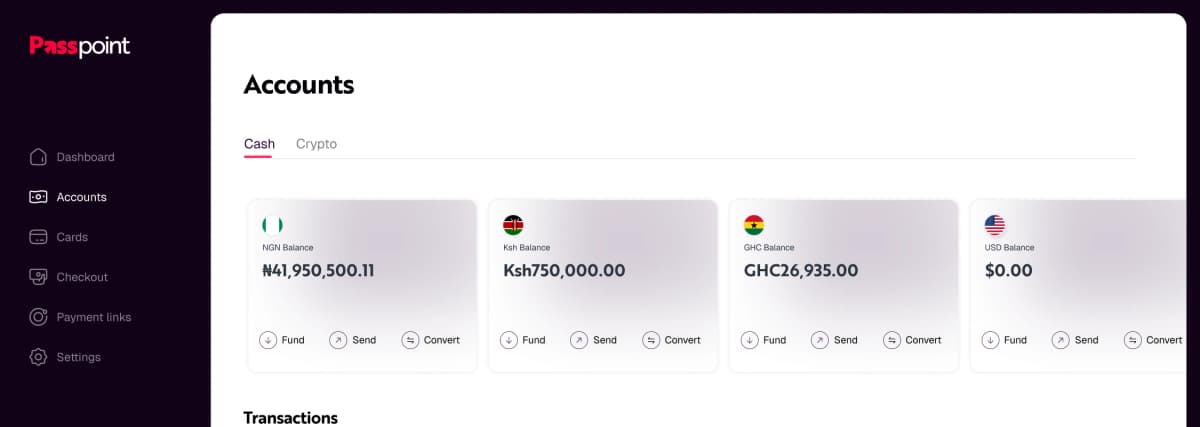
At Passpoint, this is the problem we have chosen to work on. Our thesis is that Africa does not need another layer of complexity. It needs orchestration: connecting local payment rails, FX liquidity and compliance infrastructure so that money can move across markets with the same simplicity that modern commerce increasingly demands.
The technology is important, but the bigger idea is economic.
Seamless financial movement is not merely a payments innovation. It is trade infrastructure, and trade infrastructure is macroeconomic infrastructure.
The next African growth story
The most important question for Africa over the next decade may not be, How fast can our economies grow?
It may be: How efficiently can value move between them? Because growth that cannot circulate becomes concentrated. Capital that cannot move efficiently becomes expensive. Businesses that cannot collect across borders stay small, and markets that cannot connect remain smaller than their potential.
Africa does not need to wait for the rest of the world to integrate it. We will build the infrastructure that makes integration inevitable. The future I believe in is one where an African company does not think of itself as operating in 54 separate markets, but as building for one increasingly connected economic system.
One where a business in Lagos can sell in Nairobi, manufacture in Kigali, source in Johannesburg, raise capital internationally and serve customers in London, with financial infrastructure that makes those transactions feel ordinary.
That future will not happen because we declare Africa a single market.
It will happen when doing business across Africa actually feels like one.
The next great African infrastructure project is not only roads, ports or power. It is the ability to move value, seamlessly, transparently and at scale.
And if we get that right, Africa will not simply participate in the next era of global trade. We will help define it. Read more articles