Beyond Gateways: Why Africa’s Cross-Border Payments Depend on Local Rails
More payment gateways do not guarantee better cross-border transactions. Discover why local payment rails, efficient settlement and connected infrastructure are essential to Africa's financial future.
NOV 04 - 5 MIN READ

A Nigerian payment provider expanding into Kenya can integrate another gateway and add a new market to its coverage map. But when a customer initiates a payment, a more important set of questions begins. Where does the money arrive? Who converts it? Which institution settles it? And how does the provider know exactly what reached the recipient?
These questions distinguish payment acceptance from payment infrastructure.
According to AfricaNenda's State of Inclusive Instant Payment Systems in Africa 2026, the continent has 39 operational instant payment systems spanning 43 countries. Together, these systems processed 71.4 billion transactions worth US$1.8 trillion in 2025.
Africa has made substantial progress in domestic payments. Yet moving money between these systems remains more complicated than moving money within them.
The next competitive advantage in cross-border payments will not come from connecting more gateways. It will come from making local payment rails work together.
Payment gateways solve an important problem: they give businesses ways to accept payments. Adding a gateway can introduce new checkout methods or open access to another market.
But adding gateways can also introduce more contracts, settlement arrangements, reconciliation processes and operational dependencies.
A provider may advertise coverage across dozens of countries without giving its customers consistent control over how funds move between them.
For remittance companies, neobanks and payment service providers, meaningful coverage requires answers to questions that go beyond checkout.
Can funds be collected through familiar domestic payment methods? Can they be converted into the required currency? How long does settlement take? What happens when a payment fails?
These are questions of financial infrastructure, not simply payment acceptance.
Every market has developed payment infrastructure around its economic realities.
Nigeria's NIBSS Instant Payment system supports domestic bank transfers. Kenya's M-Pesa ecosystem enables widespread mobile-money transactions. Ghana combines mobile money with bank-based digital payment infrastructure.
These systems reflect established consumer habits, local regulations and commercial relationships.
For financial institutions expanding internationally, accessing existing domestic rails can be more effective than requiring customers to adopt unfamiliar payment methods.
But local collection is only the beginning.
Funds may still need to move between institutions, undergo currency conversion and reach beneficiaries through another country's payment network. Each stage introduces operational requirements involving liquidity, compliance and settlement.
A local payment connection is valuable. A network capable of coordinating those connections is considerably more powerful.
Consider a business paying suppliers in Nigeria, Ghana and Kenya.
Its payment provider may successfully initiate transactions in all three markets, yet deliver different settlement times, foreign-exchange rates and reconciliation reports.
The business experiences inconsistency. Behind the scenes, the provider manages separate financial relationships and operational processes.
These differences can affect working capital, supplier confidence and operating costs.
According to the World Bank's Remittance Prices Worldwide, sending US$200 to Sub-Saharan Africa cost an average of 8.46% in the third quarter of 2025.
Although consumer remittance costs are not directly comparable with corporate payment pricing, they demonstrate how much payment routes and intermediaries can influence transaction economics.
The Financial Stability Board's November 2026 assessment similarly found that improvements in cross-border payment speed, cost, access and transparency remain gradual and uneven.
The infrastructure challenge therefore extends beyond moving money. It involves controlling what happens throughout the transaction.
A gateway connects payment methods. A payment network must coordinate the rules, processes and financial relationships through which transactions are executed.
That includes transaction routing, liquidity, foreign exchange, compliance, settlement and reconciliation.
Africa's Pan-African Payment and Settlement System (PAPSS) illustrates the importance of structured cross-border infrastructure, including mechanisms supporting local-currency payments and settlement.
For financial institutions, effective network infrastructure should reduce the operational burden of entering new markets while providing greater visibility over transaction outcomes.
Reliability matters as much as reach. So do predictable settlement, transparent foreign exchange and the ability to resolve failed transactions.
More connections are useful only when they translate into better financial operations.
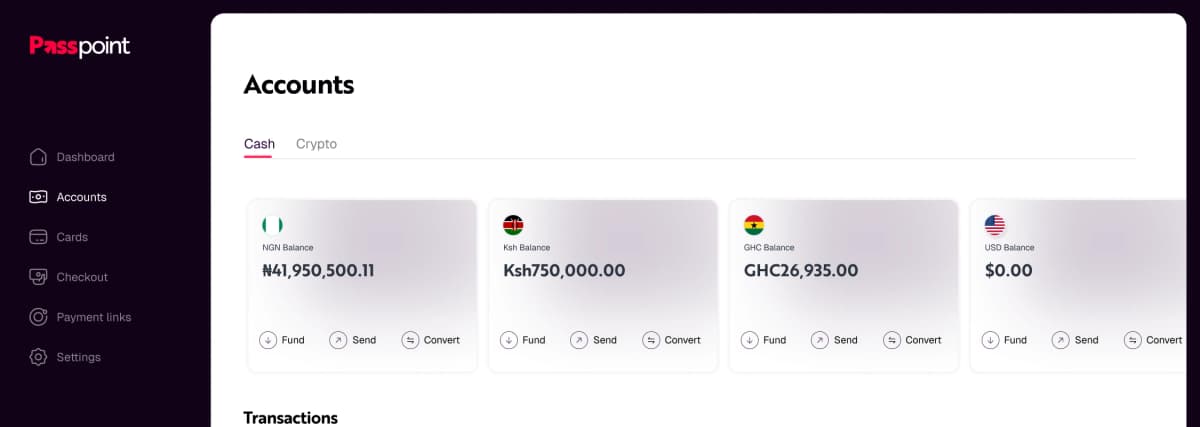
Passpoint is building a rail-agnostic payment network designed to connect financial institutions across Africa and G20 markets.
Through a single programmable connection to supported payment systems, Passpoint's approach brings local collections, payouts, currency conversion and transaction control into a more unified operating environment.
For payment service providers, neobanks and remittance companies, the opportunity is to expand across markets without independently rebuilding every component of their payment infrastructure.
Africa does not need to replace the domestic payment systems it has already built. It needs stronger infrastructure connecting them.
Because the measure of a successful cross-border payment is not how many gateways can process it. It is whether the right amount reaches the right destination, predictably, securely and efficiently. Read more articles